Via Appia Antica

We visited the Catacombe di Santa Domitilla, one of the largest of several catacombs in the southern part of Rome. It was particularly moving for us to witness the tombs of Christians who died in the early centuries of the Common Era and to see frescoes of Christ, the apostles and St Petronilla, as well as symbols of the Christian faith inscribed in marble and now set into the walls of the tombs.

Back in the sunshine we enjoyed a walk along the Via Appia Antica (Old Appian Way) which was once the most famous of all the roads that radiated from Rome to the ends of the Roman Empire.

It was lovely to catch the sound of a busy woodpecker amidst the cacophony of birdsong and to sense the threshold of spring as we followed this ancient way.


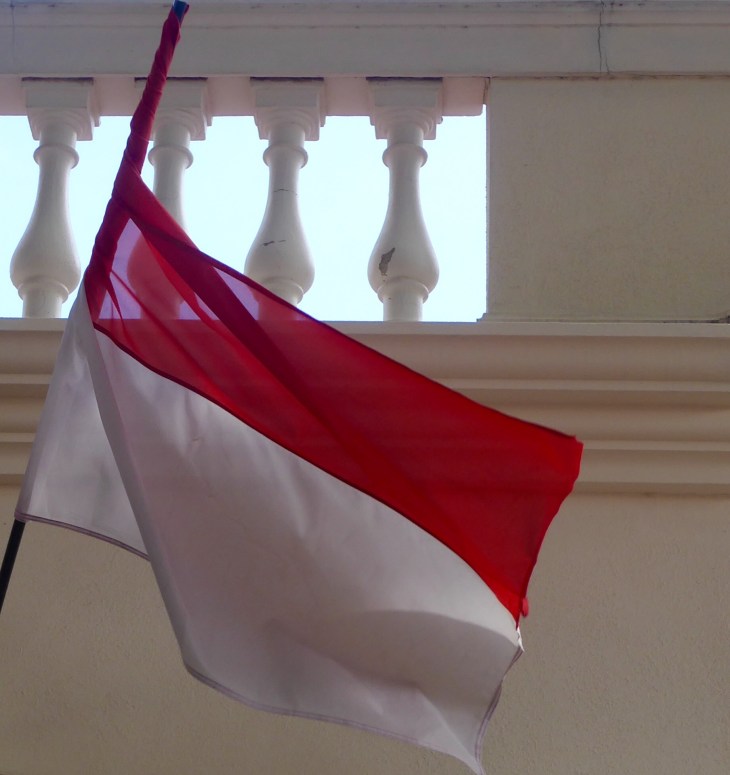
Thirteenth flag

image

The National flag and civil ensign of the Vatican City and Papal States current flag was first officially hoisted on June 8, 1929 when Pope Pius XI signed the Lateran Treaty with Italy, creating a new independent state governed by the Holy See.

The flag is divided evenly in two with yellow near the flagpole with the white half displaying the papal tiara above the crossed keys of St Peter.

For some reason all the flags we saw today appeared to be flying upside down.

Tarquinia

A wonderful day in the medieval town of Tarquinia. We wandered the winding, ancient streets then visited the Etruscan necropolis of Monterozz outside the town walls.

The necropolis has about 6,000 graves, the oldest of which dates to the 7th century BCE. About 200 of the gravestones are decorated with frescos and offer a fascinating insight into Etruscan life and death.

A visit to the National Museum of Tarquinia helped us appreciate the beauty of Etruscan art and sculpture, much of which was discovered as grave goods in the tombs.

Twelfth flag

image

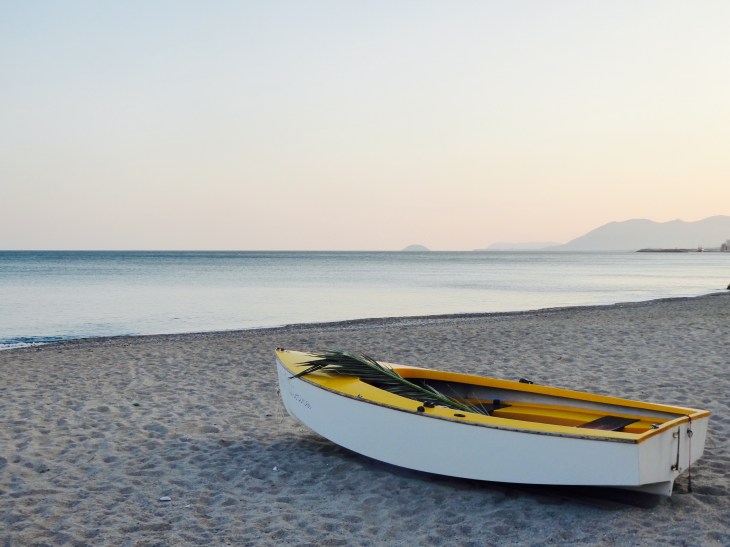
Arrived in Italy around 3.00pm. Decided to stay the night along the Riviera Di  Pontente in the coastal town of Pietra Ligure. There we spotted the Italian flag.

A common interpretation of the colours is that green represents the country’s plains and the hills; white, the snow-capped Alps, and red, blood spilt in the Wars of Italian Independence.

What have the Romans…

Spent yesterday evening and today wandering around the city of Orange in Provence. The Arc de Triomphe lies on the route of Agrippa and is dedicated to those who founded the Roman Colony of Orange in the 1st century.

Today we explored one of the most impressive Roman theatres in Europe, the Théâtre Antique, checked out the Musée d’Art et d’Histoire and visited the Cathédrale Notre-Dame-de-Nazareth.

We are staying in a 17th century stone building, now the warmly hospitable L’Herbier D’Orange, set in a tiny square close by the Roman Theatre.

St Quentin

Arriving in the town of St Quentin we immediately spotted a bronze shell set into the pavement. We followed the line of shells denoting an ancient pilgrimage route until the medieval Basilica came into view.

Set into the flagstone pavement at the west end of the nave lay a beautiful stone labyrinth. Walking the path was a reflective and intentional way to begin our travels in Europe.